If you are thinking about a move to Ventura County, Camarillo often stands out for a simple reason: it feels comfortable. You get a mild climate, established neighborhoods, plenty of parks, and a location that keeps you connected to the rest of the region without putting you in the middle of a dense urban pace. If you want a clearer picture of daily life here, this guide will walk you through what living in Camarillo really feels like. Let’s dive in.
Camarillo at a glance
Camarillo is a relatively small city in Ventura County with an estimated population of 68,652 as of July 1, 2025. It covers 19.69 square miles, which helps explain why it often feels manageable and easy to learn compared with larger Southern California cities.
The city sits in Pleasant Valley on the Oxnard Plain, roughly midway between Los Angeles and Santa Barbara along Highway 101 and about nine miles inland from the Pacific Ocean. That location gives Camarillo a strong regional advantage while still feeling like its own community.
Camarillo was incorporated in 1964 and grew from an agricultural community into a rural-suburban city. Today, it tends to feel established rather than fast-changing, which many buyers and downsizers find appealing.
The overall feel of Camarillo
Camarillo is best described as suburban, settled, and park-oriented. It does not read like a beach town, and it does not feel like a dense city center either. Instead, daily life usually revolves around home, errands, parks, Old Town, and commuting around Ventura County and beyond.
The numbers support that steady feel. The city has a median age of 42.9, and 23.0% of residents are age 65 or older. The owner-occupied housing rate is 64.6%, which adds to the sense that many people put down roots here.
For many residents, Camarillo offers a pace that feels grounded. You can still reach major job centers and shopping destinations, but your day-to-day environment is usually quieter and more routine-driven.
Weather in Camarillo
One of the biggest lifestyle draws is the weather. NOAA climate normals for Camarillo Airport show a mean annual temperature of 62.5°F and annual precipitation of 12.01 inches, which points to a mild and fairly dry climate.
January averages about 68°F for highs and 45°F for lows. August averages about 79.5°F for highs and 60.9°F for lows. That means the seasonal swings are present, but they are not extreme.
Because Camarillo sits on a coastal plain near the ocean, some areas may feel a bit cooler or warmer depending on local exposure. In practical terms, most people experience the climate as comfortable, sunny, and easier to plan around than in places with harsher winters or hotter inland summers.
Homes and neighborhood patterns
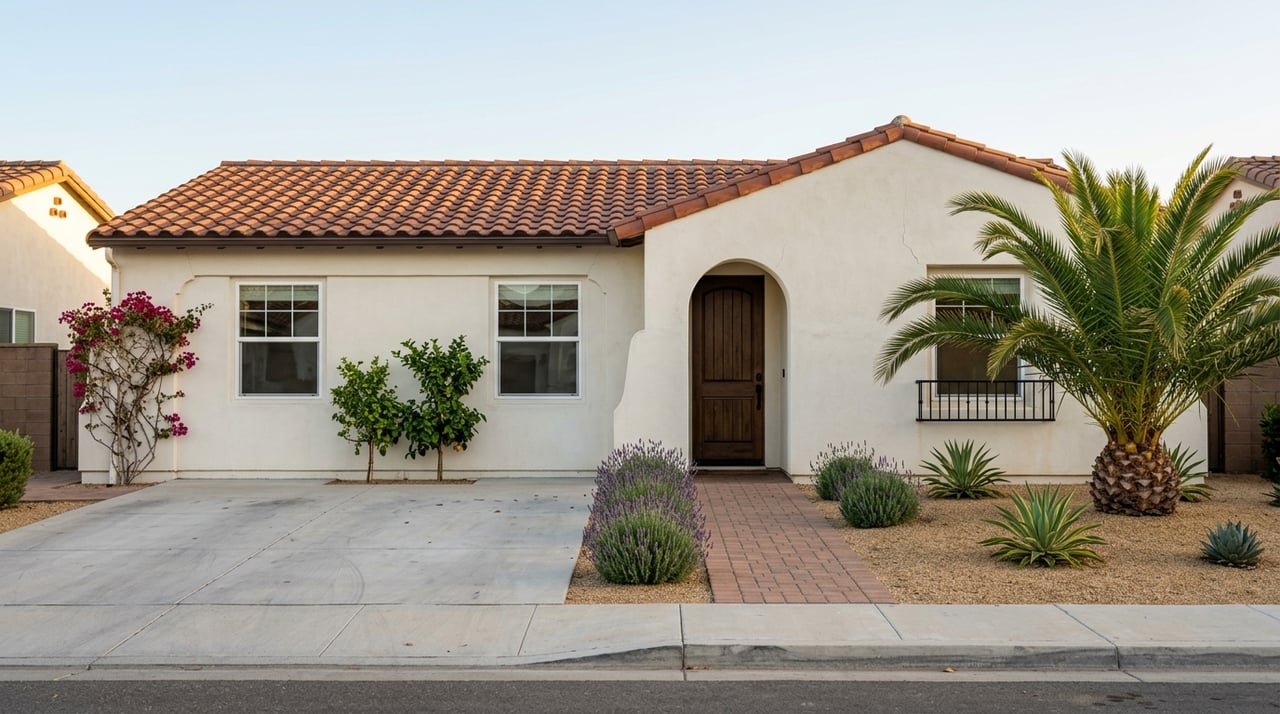
If you picture Camarillo as a place of low-rise neighborhoods, yards, garages, condos, and townhomes, that picture is mostly accurate. According to SCAG, 60.0% of the housing stock was detached single-family homes, with attached single-family homes at 16.9% and multi-family units making up 19.3% combined.
Most of the housing was built after 1970, with 78.9% of homes dating from that period or later. So while Camarillo has history, much of its housing pattern reflects a postwar suburban layout rather than an older, dense historic core.
That matters if you are comparing Camarillo with nearby cities. You are more likely to find traditional neighborhood streets, planned communities, and a range of residential options from condos to larger single-family homes than mid-rise apartment living.
What the housing market says about lifestyle
Housing data also gives you clues about how people live here. The Census Bureau reports a median owner-occupied home value of $827,300 and a median gross rent of $2,734.
Those numbers point to a city that is primarily ownership-oriented, but not exclusively so. There is a meaningful renter segment, yet the overall feel is still more rooted and residential than transient.
If you are buying, this usually means you should expect a market where neighborhood fit, home condition, and long-term livability matter. If you are selling, it reinforces why buyers often focus closely on comfort, layout, and everyday practicality.
Getting around Camarillo
Camarillo is still a car-centered city. Census Reporter lists the mean travel time to work at 23.0 minutes, and SCAG found that 82.1% of commuters drove alone.
That said, Camarillo works well for people who want a calmer home base while staying connected to the region. SCAG identified top commute destinations that included Los Angeles, Thousand Oaks, Oxnard, and Ventura, while 19.7% of workers were employed in Camarillo itself.
For many households, that means your routine may include regional driving for work, appointments, or activities, with home serving as the quieter center point at the end of the day.
Transit options you can actually use
Transit is available, but most residents use it as a supplement rather than a full replacement for driving. The Camarillo Metrolink station offers about 406 free parking spaces for passengers and connections to VCTC Intercity, Amtrak, Camarillo Area Transit, and Rally.
The city trolley system also connects practical stops like Metrolink, shopping centers, Camarillo Town Center, Premium Outlets, and Old Town. For some residents, that can make certain errands or outings easier without needing to move the car for every stop.
Parks and outdoor routine
A big part of life in Camarillo happens outdoors, especially in parks. Pleasant Valley Recreation and Park District maintains more than 256 acres across 28 parks, open space areas, and recreation sites.
This is one reason the city often feels so livable. Recreation is not limited to one major attraction. Instead, it is built into everyday life through local parks, sports fields, walking areas, and community facilities.
Standout parks and recreation spots
Community Center Park has been part of Camarillo since 1969 and includes the district offices, community center, senior center, auditorium, and classrooms. It reflects how recreation here often overlaps with community programming and local events.
Bob Kildee Community Park, also established in 1969, includes an aquatic center, skate park, lighted fields, tennis and pickleball courts, and soccer fields. It supports a wide range of activities, from casual recreation to organized sports.
Camarillo Grove Park offers a different setting, with a nature center, hiking trail, dog park, and picnic areas in a more rustic environment near the Conejo Grade. If you like mixing suburban convenience with access to outdoor space, this kind of park network is a real advantage.
Old Town and everyday errands
Camarillo’s lifestyle is not built around dense, all-day walkability, but it does have pockets of local activity that help define the city. Old Town is one of the best examples.
The Camarillo Certified Farmers Market takes place every Saturday from 8 a.m. to noon in Old Town. That gives many residents a reliable weekly ritual and a reason to spend time in a more local, small-scale setting.
Old Town also includes a mix of shops, cafes, and casual gathering spots. Instead of a fast downtown scene, the area tends to support lower-key outings and regular routines.
Shopping and convenience
City economic-development materials describe Camarillo Premium Outlets as a 160-store retail destination right off Highway 101. Along with Town Center and other shopping corridors, this gives residents strong retail access close to home.
In practical terms, many Camarillo routines involve driving for errands, combining stops efficiently, and mixing in a market visit, a park stop, or time in Old Town. That pattern fits people who value convenience without needing an urban lifestyle.
A city with local history
Camarillo also carries visible ties to its ranch-era past. The Camarillo Ranch Foundation preserves and operates the historic ranch site as a community focal point, and the property is tied to the legacy of Adolfo Camarillo.
That history adds character to the city. Even though much of the housing and layout is suburban, Camarillo has a sense of place that comes from more than just recent growth.
For residents, that often shows up as civic pride and a stronger local identity than you might expect from a city of this size.
Who tends to enjoy living in Camarillo
Camarillo tends to appeal to people who want stability, comfort, and regional access. If you like the idea of established neighborhoods, moderate weather, parks, and a routine that centers on home and community spaces, the city checks a lot of boxes.
It can be especially attractive if you are downsizing, moving up within Ventura County, or looking for a home base that feels calm without feeling isolated. You are not choosing a dense urban environment here. You are choosing a place where daily life often feels steady and practical.
That is also why local guidance matters when you start comparing one part of Camarillo to another. Housing type, commute patterns, and proximity to parks, shopping, or transit can shape your experience more than broad citywide averages.
If you are considering a move to Camarillo or planning to sell and make your next move within Ventura County, working with someone who knows the city block by block can make the process a lot clearer. Rick Pena brings lifelong Camarillo roots, 24 years of residential experience, and calm, practical guidance to buyers and sellers across the area.
FAQs
What is the general lifestyle like in Camarillo?
- Camarillo generally feels established, suburban, and park-oriented, with daily life centered on home, errands, parks, Old Town, and regional travel.
What is the weather like in Camarillo throughout the year?
- Camarillo has a mild climate, with January averaging about 68/45°F, August averaging about 79.5/60.9°F, and annual precipitation around 12.01 inches.
What types of homes are common in Camarillo?
- Detached single-family homes make up the largest share of housing, followed by attached homes, condos, townhomes, and other multi-family options.
Is Camarillo a good place for commuters in Ventura County?
- Camarillo can work well for commuters because it offers access to Highway 101, regional job centers, and supplemental transit options like Metrolink and local bus connections.
What are some popular things to do in Camarillo on weekends?
- Many residents spend time at local parks, visit the Saturday farmers market in Old Town, run errands at shopping centers, or enjoy casual outings around the city.
Does Camarillo feel more urban or suburban?
- Camarillo feels much more suburban than urban, with low-rise neighborhoods, a car-centered layout, and a routine built more around community spaces than dense walkability.