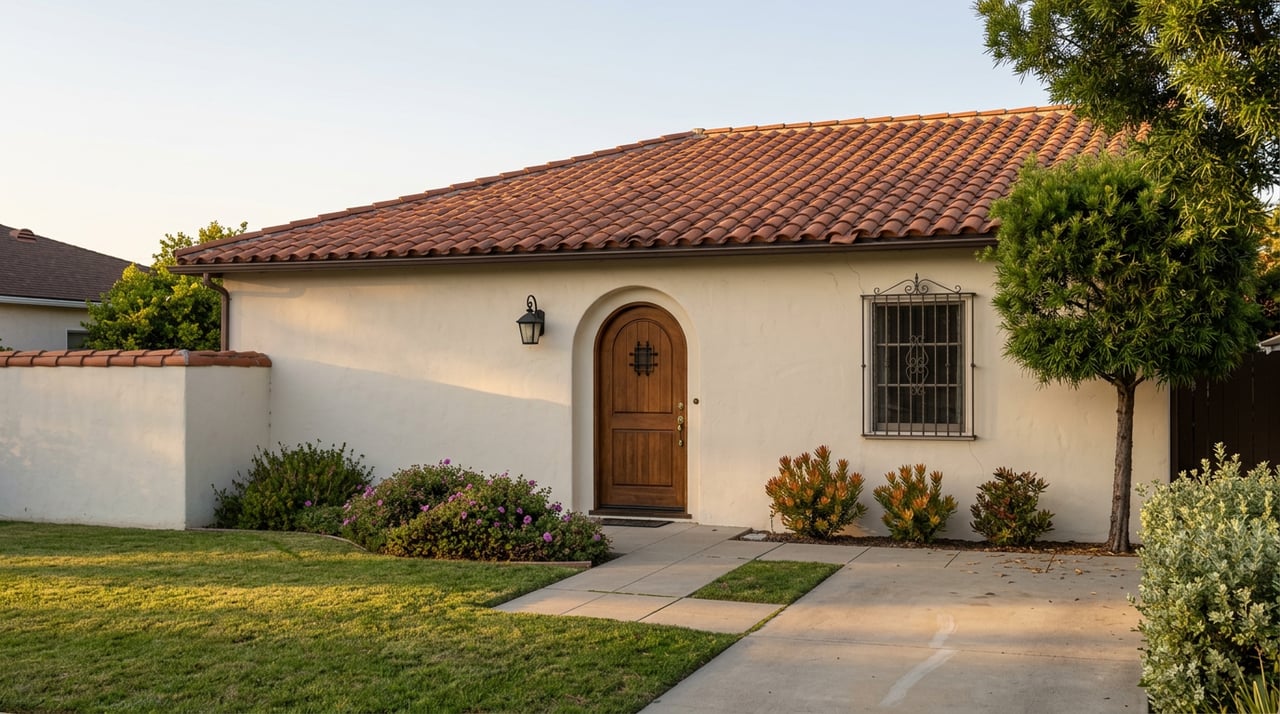
Picture two 1920s bungalows three blocks apart in Midtown Ventura, both listed within $20,000 of each other, both with the same square footage and the same "charming, walkable, close to Main Street" language in the listing description. A buyer assumes they're functionally the same purchase. They are not, and the difference has nothing to do with the kitchen or the roof.
One of those homes sits inside a boundary that Ventura's City Council just formally adopted. The other doesn't. That single fact changes what the home might cost to own for the next decade, what it takes to remodel it, and whether a real property tax reduction is even on the table. Most buyers walking through either house have no idea the distinction exists, and most sellers aren't volunteering it.
What the City Council Actually Did on July 14
After roughly two hours and twenty minutes of public comment and deliberation, the Ventura City Council voted 3-2 on July 14, 2026 to adopt the citywide Historic Context Statement and Survey, a project the city had been building since 2019. The Council carved out three private properties that had objected during the review process and coded the school district's properties separately rather than evaluating them individually. Everything else on the draft list moved forward.
That vote closed a long public process. Notice postcards went out to property owners, certified letters followed for owners who didn't respond, and a number of homeowners pushed back hard, some arguing their property hadn't reached the 50-year age mark generally used as a historic benchmark nationally, others simply not wanting the added scrutiny that comes with being flagged. Ventura's own survey actually casts a wider net, capturing structures 40 years and older so nothing potentially significant slips through. The survey folds in years of prior neighborhood-level work, including districts identified in Downtown and Midtown such as the Mitchell Block Residential Historic District on the 600 block of East Thompson Boulevard, the Selwyn Shaw Residential Historic District, a 17-parcel Emma Avenue residential grouping, and a 174-parcel area in Hobson Heights. The city's own preservation office now counts more than 120 designated Ventura Landmarks, a number that will likely grow as owners in these newly surveyed areas pursue designation.
Being named in the survey doesn't make a house a landmark. It makes it a candidate. Actual designation still requires the owner's consent, a recommendation from the Historic Preservation Committee, and its own public hearing. But candidacy is not nothing. It's the first link in a chain that ends, for some owners, at a real property tax cut.
The Program Most People Have Half-Heard Of
The Mills Act is the reason "historic house" and "tax savings" get mentioned in the same breath in California. It's a state-enabled, city-administered program that lets Ventura enter a contract with the owner of a designated landmark or a contributing property in a historic district. In exchange for maintaining the home to specific preservation standards, the owner's property is reassessed using an income approach rather than a straight market comparison, and the city's own materials put the resulting savings at roughly 50 percent a year for owners who recently purchased or improved an older property.
The contract runs a minimum of ten years, renews automatically each year unless either side files a notice of nonrenewal, and transfers to the next owner when the home sells. That last detail matters more than most buyers realize. If you buy a home that's already under a Mills Act contract, you inherit both the tax benefit and the maintenance obligations that come with it. If you buy a home the city just added to its survey, you're buying proximity to that benefit, not the benefit itself. Someone still has to pursue designation, get through the hearings, and sign the contract.
This is where the two bungalows stop looking alike. The one inside the newly adopted survey boundary has a real, if unrealized, path to that 50 percent reduction. The one outside it doesn't, no matter how old or charming it is.
The Other Program, and Why It's Not Running Right Now
Here's the part that trips people up, including some who've done their homework. California also has a state historic tax credit, created by SB 451 in 2019, that offers a 20 to 25 percent credit against rehabilitation expenses for a certified historic structure. It's a completely different mechanism from the Mills Act. Mills Act reduces your annual property tax bill through the county assessor. SB 451 reduces your state income tax liability based on what you spend fixing the place up.
The catch, as of today, is that SB 451's credit provisions expired December 31, 2025. A renewal bill, AB 1265, has been working through the Legislature all year. It passed the Assembly unanimously back in January, cleared the Senate Revenue and Taxation Committee over the summer, and cleared the Senate Appropriations Committee 7-0 on August 13, 2026, coming off the suspense file where it had been sitting since early August. Five days later it was ordered to the Senate's special consent calendar, the step just before a full floor vote. The Legislature's deadline to pass bills this session is August 31, and the bill still needs to clear that floor vote and reach the governor's desk. It may well become law again before the year is out. It is not law right now.
| Mills Act | State Historic Tax Credit (SB 451 / AB 1265) | |
|---|---|---|
| What it reduces | Annual property tax bill | State income tax liability |
| Who administers it | City of Ventura | California Franchise Tax Board |
| Current status | Active, has run since the 1990s | Expired Dec. 31, 2025; renewal (AB 1265) on the Senate's special consent calendar as of Aug. 18, 2026, awaiting a floor vote and governor's signature |
| Transfers on sale | Yes, automatically | Not applicable in the same way, tied to rehab expenditures |
If a seller's flyer or a well-meaning agent tells you an older Ventura home "qualifies for a historic tax credit," ask which one they mean. There's a real chance they're thinking of a program that isn't currently operating.
Why This Doesn't Show Up in the Median You're Comparing
The most recent citywide numbers put Ventura's median sale price at $899,000 over the trailing three months, with homes taking a median of 43 days to sell. That figure is a blend. It doesn't separate a 1920s Craftsman in a surveyed Midtown block from a 1998 tract home in East Ventura, and it certainly doesn't account for whether either one carries, or could someday carry, a Mills Act contract.
That's the part worth sitting with if you're cross-shopping neighborhoods. A buyer comparing Ventura to, say, a newer-construction suburb elsewhere in the county is usually comparing price per square foot and calling it a day. But an older home inside the newly adopted survey area carries a cost structure the median can't see: potentially lower long-term property taxes if you pursue designation, balanced against the added step of a Historic Preservation Committee hearing before any major exterior change or demolition. Neither of those shows up in a portal search, and both can matter more over a decade of ownership than the difference between two list prices.
Before You Write an Offer on an Older Ventura Home
A few questions are worth asking before you assume either the upside or the friction applies to a specific address.
Ask whether the property address appears on the adopted survey list, not just whether the neighborhood "feels historic." The survey is a specific document with specific parcels, and the city's Community Development Department can tell you if a given address is on it.
Ask whether the home already carries a Mills Act contract. If it does, that contract and its obligations pass to you at closing. If it doesn't, designation is a process you'd start from scratch, one that requires your consent as the future owner and isn't guaranteed.
Don't assume a state income tax credit is available today. Confirm the current status of AB 1265 before you build it into your math, since the program it would renew has been dark since the start of the year.
If your plans for the home include a major remodel or a teardown-rebuild, find out early whether the property is one the Historic Preservation Committee would need to review first. That review adds time and, occasionally, design constraints that a newer-construction purchase simply doesn't carry.
A Few Questions Worth Answering Directly
Does being on the survey mean my property taxes go up? No. The survey itself doesn't change your assessment. It only identifies properties that could later pursue landmark status and, from there, a Mills Act contract.
Can I refuse to have my home included? The city requires property owner consent for actual historic designation. Being flagged in the survey and being formally designated a landmark or district contributor are two different steps, and the second one needs your sign-off.
What happened to the three excluded properties? The Council's July 14 vote specifically carved those three out of the adopted survey after owner objections, so they weren't included in the final document the way most surveyed properties were.
An older home in Ventura can be a genuinely smart purchase, and a newly adopted survey doesn't change that. It just means the math is more specific than a median price can capture, and specific math is exactly the kind of thing worth working through with someone who follows this market closely rather than guessing from a listing description.
If you're weighing an older home against something newer, or you want a straight read on what a specific Ventura address carries with it, Rick Pena has spent 24 years working these neighborhoods block by block. Let's Connect.