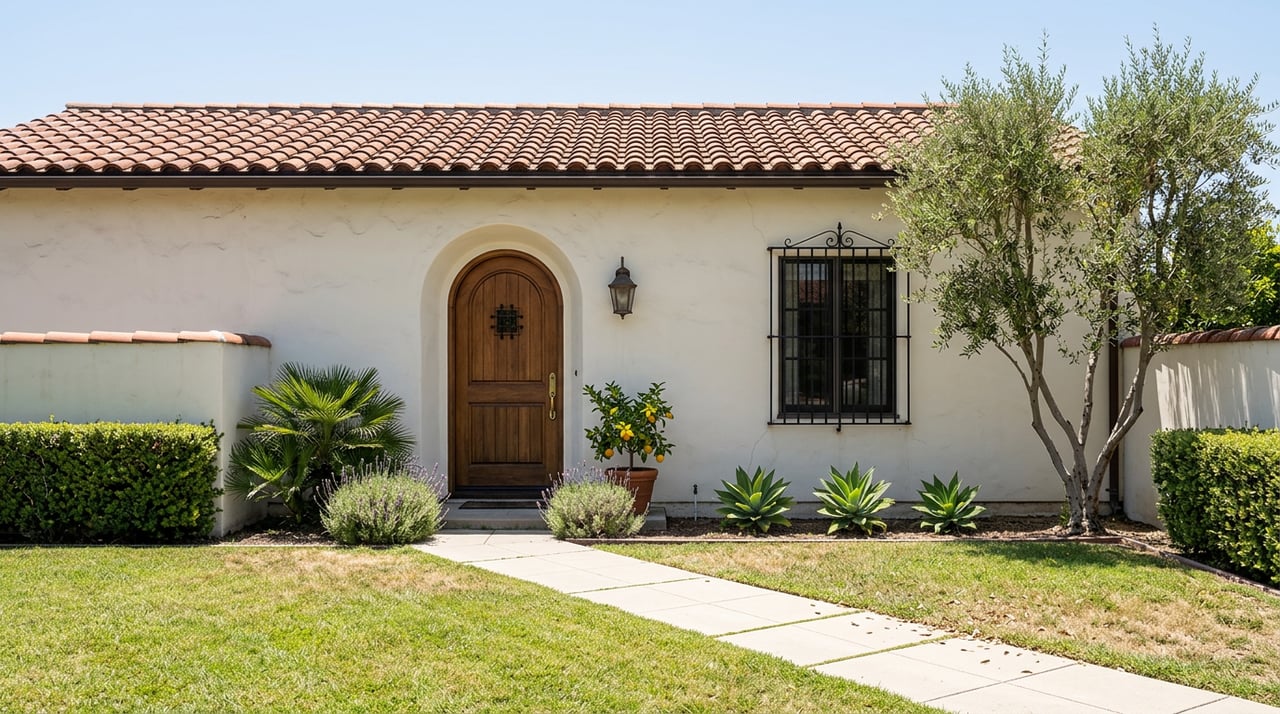
Picture two buyers who each just got an offer accepted in Dos Vientos, both at $1.1 million, both closing the same month. One of them is paying roughly $500 a year in Mello-Roos taxes. The other is paying closer to $4,000. Same price. Same neighborhood. Same closing timeline. A gap of nearly $300 a month that never once appeared on either listing sheet.
That gap is not a fluke or a pricing error. It is baked into how Dos Vientos was built, and it is the single most useful thing a buyer or seller in this community can understand before a number gets written into a contract.
The line item that doesn't live in the price
Mello-Roos is a special tax, not a regular property tax. It comes from the Mello-Roos Community Facilities Act of 1982, which let California cities create Community Facilities Districts to pay for infrastructure like roads, water lines, sewers, and schools after Proposition 13 cut off the old way of funding that growth. Instead of raising everyone's base tax rate, cities let developers finance the improvements with bonds and pass the repayment on to the homeowners who benefit from them, itemized on the property tax bill.
The part that catches people off guard is what it is not. It is not calculated as a percentage of your home's value, so it does not shrink relative to price the way your base tax effectively does when a home appreciates. It stays fixed, or moves according to whatever escalation formula the district set at formation, for as long as the bond is outstanding, which can run up to 40 years or until the debt is retired, whichever comes first. Proposition 13's 2% annual cap applies to your base assessment. It does not apply here.
That distinction matters because it means the age of the bond, not the age of the house, is what determines the bill.
Dos Vientos was built in waves, and the tax bill remembers every one
Dos Vientos is not a single subdivision that went up all at once. It is a 2,350-unit master-planned community in the westernmost part of Newbury Park, approved by the Thousand Oaks City Council in April 1988, with infrastructure completed and major construction following in 1998. It became the largest residential project ever built in Newbury Park, rising in tracts against the base of the Santa Monica Mountains along the edge of the Dos Vientos Open Space.
Because it was built in phases across more than two decades, each phase financed its own share of roads, parks, and utilities with its own bond issuance, on its own timeline. The result is four distinct tax pictures inside one community name:
| Build phase | Bonds typically issued | Approximate annual CFD charge today | Bond years remaining |
|---|---|---|---|
| Phase 1 | Early-to-mid 1990s | Roughly $400 to $1,500 | Many nearing payoff within 5-10 years |
| Phase 2/3 | Late 1990s to early 2000s | Roughly $1,500 to $2,800 | Roughly 15-25 years |
| Phase 4 | 2019-2023 | Roughly $2,500 to $4,500 | Roughly 35-40 years |
A $3,500 annual charge in a Phase 4 tract works out to about $290 a month, money that a lender treats the same way it treats a mortgage payment or HOA dues when calculating debt-to-income. A Phase 1 buyer several tracts away might be carrying a fraction of that, on a bond that could be retired before their kids finish elementary school.
The purchase price on a Dos Vientos home tells you almost nothing about what you'll actually pay every month. The phase does.
Why the median price can't see any of this
A citywide or neighborhood median gets built by averaging list prices and sale prices. It has no mechanism for capturing what sits underneath the price, which is exactly where Mello-Roos lives. Two Dos Vientos homes can list at identical prices, close in the same week, and carry meaningfully different true costs of ownership for the next two or three decades, and the median will never register the difference because it was never designed to.
This is the part that gets missed most often by buyers relocating from areas where CFDs are rare. They compare price per square foot across neighborhoods, decide Dos Vientos pencils out, and never ask the one question that actually separates two homes at the same number.
It isn't only a Newbury Park story
The same phase-based pattern shows up elsewhere in Thousand Oaks, just under a different name. The city's own Community Facilities District No. 1994-1, formed the same year its number suggests, funds the Marketplace public parking structure and pedestrian and traffic circulation improvements downtown. Under state law, any agency that has issued Mello-Roos bonds since January 1993 has to file a Yearly Fiscal Status Report with the California Debt and Investment Advisory Commission every year until the bonds are retired, which means the bond's remaining life and payment status are matters of public record, not guesswork.
The lesson generalizes past Dos Vientos: any Thousand Oaks property built or improved through a CFD carries a bond with its own maturity date, and that date is knowable if you ask for it early rather than discovering it at underwriting.
What this actually changes about how you shop or list
Because the Mello-Roos figure does not appear on the flyer and is not folded into the list price, it has to be requested rather than assumed. A workable sequence looks like this:
- Ask for the exact name of the CFD as it appears on the current property tax bill, not a general estimate from an old disclosure.
- Request the actual tax bill or have the title company pull it, rather than relying on a phase-based range as a stand-in for the real number.
- Ask how many years remain on that specific bond series. Two homes built the same year can still sit on different bond schedules if the district refinanced or issued a second series.
- When comparing two homes at similar prices, add base property tax, Mello-Roos, and HOA dues together for a true monthly figure instead of comparing list price alone.
- If you're selling a home in an older phase that's close to bond payoff, put that in writing early. It's a real advantage over newer-phase competition that a buyer won't discover unless you tell them.
California law already requires sellers to disclose CFD status before a buyer typically makes an offer, so the information is not something a seller can withhold. What buyers still have to do on their own is read the packet closely enough to see which phase, and therefore which bond schedule, they're actually buying into.
Having spent the early part of his career on the escrow and title side at First American Title before moving into sales, Rick Pena has spent a lot of time reading exactly this kind of paperwork before it becomes a surprise at closing. That background is part of why buyers and sellers in Dos Vientos tend to get a straight answer on this early, not a shrug.
A few things buyers ask
Does Mello-Roos ever just go away? Eventually, yes. The tax runs until the bond is paid off or for a maximum of 40 years, whichever happens first. Some districts keep collecting a smaller amount after the debt is retired to fund ongoing maintenance, so check whether the specific CFD does that before assuming the charge disappears entirely once the bond term ends.
Is Mello-Roos tax deductible? It depends on what the specific CFD funds and your broader tax picture, and the federal SALT cap complicates the math further. This is a question for a tax professional who can look at the actual CFD documents, not something to assume either way from a blog post.
Does an older phase with a lower Mello-Roos bill always mean the better deal? Not automatically. Older phases can mean smaller lots, older systems, or fewer of the amenities that came with later construction. The CFD number is one input into total cost of ownership, not the only variable worth weighing.
If you're weighing a home in Dos Vientos, or anywhere else in Thousand Oaks where a CFD shows up on the tax bill, it's worth working through the real numbers before you write an offer, not after. Rick Pena has spent two decades in Ventura County real estate with a title and escrow background built for exactly this kind of paperwork. Let's Connect and go through your specific numbers together.